Mars
Hello, and welcome to my webpage! Here, you can learn a lot of random facts about Mars, whether they are about the planet itself, rovers, flybys, or more!
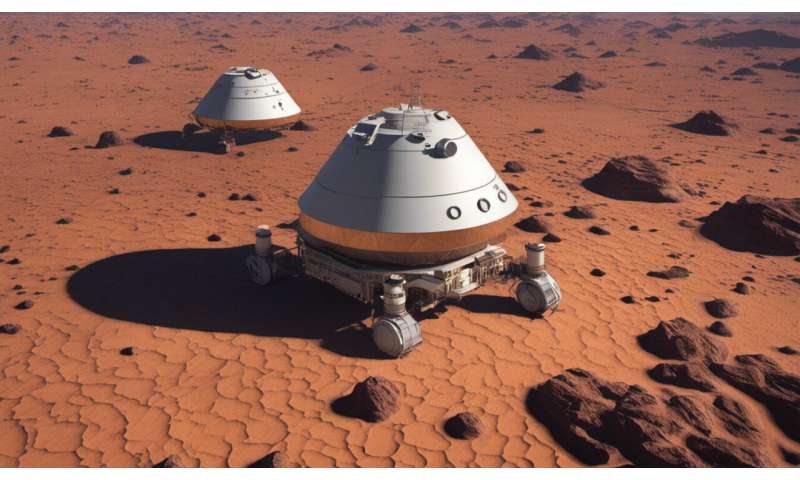
What is Mars?
Mars is the 4th planet away from the sun, meaning it is right after Earth. It can be called "The Red Planet" as well as "Mars" because of its red surface made of iron oxide, better known as rust. Mars has two moons named Phobos and Deimos.
- Mars' atmosphere is 95% carbon dioxide, so we would die if we ran out of oxygen (depends how long we are there)
- We need water, but the average temperature is -65º C, so it is either the water or us that will freeze.
- Sunrises and Sunsets on Mars are very different, as they appear blue
- There is no intelligent life on Mars that we have discovered yet. But, scientists have reasons to think that there could be very simple forms of life that we haven't discovered. We think this because Earth and Mars are similar in so many ways
a) The two planets are very close to each other
b) It has a similar axis, or tilt, which gives it seasons just like Earth
c) Finally, it is made from rocks and minerals, which means it is terrestrial.
- Some people back in very early times thought there were canals which meant intelligent life. It was just an optical illusion from their telescope which proved them wrong. So why were these people so interested in Mars? Well, you can see it without a telescope and still find great detail.
There may be life on Mars. Firstly, all living things need water to survive according to most scientists. Rovers and other discoverers have captured images of riverbeds that may have held water for living things to drink from. But, Mars doesn't trap heat like Earth does because of a very thin atmosphere. This means that the average temperature on Mars is a rough -63º C (-81.4º F), and therefore, any water would freeze instantly. In addition, as was said earlier, Mars's atmosphere is mostly made of carbon dioxide, so creatures like us cannot breathe. However, some plants and other organisms can both breathe carbon dioxide and survive very cold temperatures, so simple forms of life may be on Mars.